
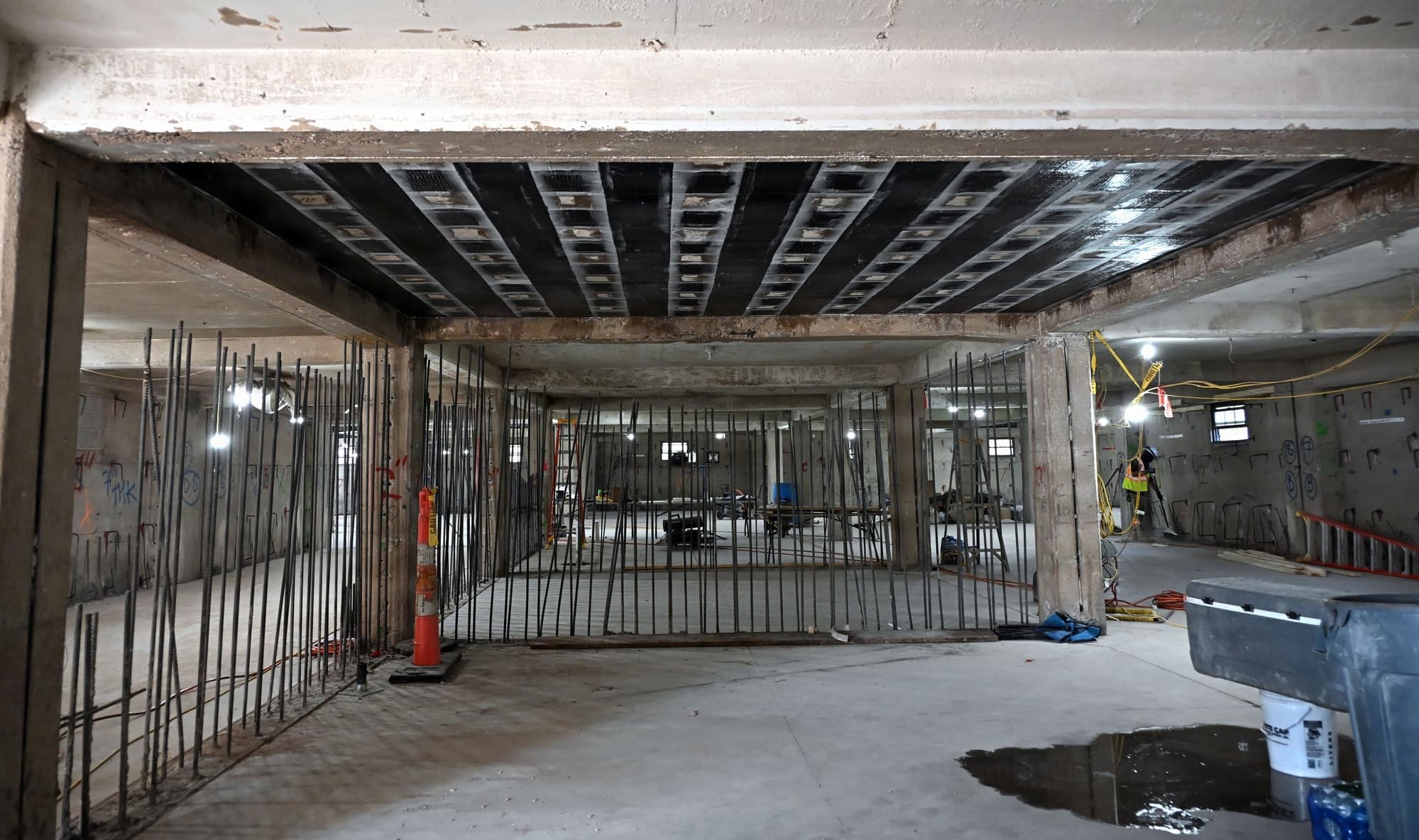
The crew is on site. The workfront is not.
On the schedule the area shows as open, but in the field the approved drawing is missing, the drywall crew is still in the room, or the wire is sitting in a laydown yard two buildings over. Electricians who were told to report get paid anyway. The question is how much of that you can prove later.
The law already says the waiting is work
The federal hours-worked interpretation at 29 CFR 785.15 uses this exact problem as an example. A repair man, it says, "is working while he waits for his employer's customer to get the premises in readiness." The Department of Labor's Fact Sheet #22 draws the line between an employee "engaged to wait," which is work time, and one "waiting to be engaged," which is not. A crew standing in an unreleased area at 7 a.m. is engaged to wait.
California goes further. Section 5(B) of IWC Wage Order 16, which covers on-site construction, says a worker who is required to report and gets no work, or less than half the scheduled day, is owed half the scheduled day at the regular rate, never less than two hours or more than four. The exceptions in 5(C) are threats to employees or property, a failure of public utilities, and an Act of God or any other cause outside the employer's control.
Union agreements price it too. Section 3.09 of the IBEW Local 48 and NECA Oregon-Columbia Chapter agreement pays two hours' wages to workers ordered to report and not put to work, unless it was their own fault or conditions were beyond the employer's control. Terms differ by local.
A wage rate is the wrong number
The Bureau of Labor Statistics put the median electrician wage at $30.38 an hour in 2025, in its Occupational Outlook Handbook. That is only the wage. The Employer Costs for Employee Compensation release for June 2026 put total compensation in the private construction industry at $51.96 per hour worked, about $36.13 of it in wages and $15.84 in benefits, including $4.42 in legally required benefits (BLS rounds each figure separately).
Wage, burden, overhead, markup and a staffing bill rate are different numbers. Mixing them is how the same dollar gets counted twice.
"The labor get paid as long as they show up," says Perry Daneshgari, president and CEO of MCA, Inc., in a 2023 EC&M article by Tim Kridel. "The company gets paid when they perform." Use the hourly cost basis your finance team approved, and write down what is in it.
As an illustration at the BLS construction average, six electricians idle for three hours cost roughly $935 (18 hours times $51.96) before equipment standby, a lift move or a second setup.
How many hours actually disappear
"They probably only spend 40% to 45% of their time installing," says Jamie Sullivan, president of Milwaukee-based Staff Electric, in the same article. His picture of a ready workfront is an electrician on the 18th floor at 7 a.m. with his drawings in front of him. "He would have all his material. All he would have to do is install it," says Sullivan.
Field measurement backs him up. Porwal, O'Brien and Borcherding of the University of Texas at Austin, writing in Frontiers in Built Environment in 2025, looked at work-sampling data from 61 projects executed between 2016 and 2023. Mean direct work was 35% on traditional projects and 42.75% where advanced work packaging and workface planning were both in use, while mean delay fell from 39.7% to 34.1%.
Glenn Ballard found the same pattern in the 1990s. His 2000 dissertation on the Last Planner System says "only about half of the assignments made to construction crews at the beginning of a week were completed when planned," and that the reasons for failure "were dominated in most cases by materials-related problems."
Late in a job the cost climbs fast. At Vogtle Unit 3 in Georgia, Don Grace, vice president of engineering for the Vogtle Monitoring Group, testified to the Georgia PSC in June 2020 that weekly cost performance indices averaged 3.87 for cable pulling and 6.49 for terminations. His testimony defines the index as actual hours divided by earned hours, so terminations took, on average, about six and a half hours for every hour earned. He cited "the stacking of crafts," along with testing that ran in parallel with construction, as reasons he saw no sign of the trend easing, and Southern Nuclear's own risk analysis assumed schedule delay cost roughly $100 million per month.
Awad Hanna of the University of Wisconsin-Madison wrote in Electrical Contractor in 2004 that data from several electrical contractors showed no efficiency loss at 191 square feet per worker and "a 50 percent loss of efficiency at a worker density of 90 square feet per worker." Neil Davidson, executive vice president at Commonwealth Electric Company of the Midwest, told EC&M in 2023 that somebody on the job is always missing something they need. "So, you have to work around and then come back," he said.
A standby claim with no records was worth zero
The clearest lesson is a Navy renovation at Camp Lejeune, North Carolina, awarded to Alderman Building Co. in March 2009 with Big John's Electric as the electrical subcontractor. New facilities for the building's tenants were not ready. The contracting officer's July 2009 suspension letter gave the reason as "Government delays in vacating the premises," according to Equipment World. Big John's project manager attested that the start was pushed back eight times, from June 1, 2009 to February 19, 2010. He also said the company kept two workers on standby for that stretch.
The Armed Services Board of Contract Appeals (ASBCA No. 58082) later awarded $34,795 in unabsorbed home-office overhead. It threw out all $21,753 of the standby-labor claim, because that figure was an expert's estimate for one electrician and one supervisor, with no payroll or job-cost records behind it. "There was no evidence that an electrician and a supervisor were literally standing by," Doug Walker of Davis Wright Tremaine wrote in 2020. His advice was to "support claimed labor costs with contemporaneous cost records."
Multipliers are no substitute. The Mechanical Contractors Association of America says in its Bulletin PD2 that its productivity-loss factors were "gathered anecdotally from a number of highly experienced members" of a committee. An essay in the same bulletin by Gerson B. Kramer, former chairman of the Department of Transportation's Contract Appeals Board, says a contractor "needs to maintain accurate contemporaneous productivity records."
Keep the record small and factual. Count the workers who were actually there, the hours they waited, and the approved hourly cost. Add logged equipment standby and documented restart costs. If the crew waited 30 minutes and then did two hours of useful prefab, only the 30 minutes is waiting. The foreman records who was there, what stopped the package and when it cleared, and finance applies the cost basis. Anything downstream, a missed milestone or overtime, goes through the normal change process, and the lookahead work in turning a labor-loaded schedule into a crew plan is where repeat failures get fixed.
Decide what open means before the crew shows up
Ballard's soundness test asks whether all materials are on hand, whether design is complete and whether prerequisite work is complete. When assignments were screened against criteria like these in Ballard's experiments, plan reliability tended to rise from about 50% to the 65 to 70% range, with a productivity gain of about 30%. Dave Aguirre, director of construction services at Tri-City Electric, uses nearly the same list, "information, material, and tools," and says in a September 2026 EC&M piece that if one is missing, "your productivity is shot." Natalie Eide, Wesco's vice president of construction for the Southeast, says the link between the field and the back office "does not always get enough attention." "A crew may be ready to work, but the materials, approvals, or information they need may not be ready with them," says Eide.
Greg Shannon, director of project management at Henderson Building Solutions, told EC&M in the same September 2026 piece that he runs daily sub meetings where the plumber calls out a water line shutdown and the electrician calls out panels that are locked out. The meetings can be short. "Even if it's just a 10- or 15-minute meeting," says Shannon.
The California State Auditor's Report 2018-108 found the high-speed rail authority began construction in the Central Valley in October 2013 before it had acquired enough property to build on, which led to "labor, materials, and equipment under contract but not in use." Delays in buying that property cost $64 million and 17 months on Project 1 alone. The auditor recommended formal prerequisites for starting construction, with benchmarks for property acquisition, utility agreements and relocations, and agreements with outside stakeholders, before the next contract was signed.
Schedule pressure never makes energized work acceptable
Cost does not change the safety rules. In a 2006 interpretation letter on the general-industry rule at 29 CFR 1910.333, Richard E. Fairfax, OSHA's director of enforcement programs, wrote that if shutting equipment down would "merely alter or interrupt production," de-energizing is considered feasible. On construction sites, 29 CFR 1926.416(a)(1) bars work close enough to contact a circuit unless the employee is protected by de-energizing and grounding it or by guarding it effectively.
OSHA's guidance for host employers, contractors and staffing agencies says information is communicated "before on-site work starts and, as needed, if conditions change." Its Protecting Temporary Workers page says host employers and staffing agencies "share responsibility for ensuring worker safety and health."
Use the cost record to fix the release process, never to push a crew past a missing permit or an open isolation.
This article is general information, not legal advice. Check pay and safety rules for your own situation with an employment lawyer.
Sources
- 29 CFR 785.15, On duty, Legal Information Institute, Cornell Law School, accessed September 29, 2026.
- Fact Sheet #22: Hours Worked Under the Fair Labor Standards Act, U.S. Department of Labor, Wage and Hour Division, July 2008.
- Order No. 16-2001, Certain On-Site Occupations in the Construction, Drilling, Logging and Mining Industries, California Industrial Welfare Commission, as amended effective January 1, 2026, accessed September 29, 2026.
- Commercial/Industrial Agreement, January 1, 2024 to December 31, 2026, IBEW Local 48 and NECA Oregon-Columbia Chapter, October 24, 2023.
- Occupational Outlook Handbook: Electricians, U.S. Bureau of Labor Statistics, accessed September 29, 2026.
- Employer Costs for Employee Compensation, Table 4 (June 2026), U.S. Bureau of Labor Statistics, September 9, 2026.
- How to Reduce Lost Labor Hours on Electrical Construction Projects, Tim Kridel, EC&M, February 10, 2023.
- Examining the impact of Advanced Work Packaging and WorkFace planning on direct work rates of on-site construction workers, Vishal Porwal, William J. O'Brien and John D. Borcherding, Frontiers in Built Environment, July 3, 2025.
- The Last Planner System of Production Control, Herman Glenn Ballard, PhD thesis, University of Birmingham, May 2000.
- Direct Testimony of Donald N. Grace, Docket No. 29849, Twenty-Second Semi-Annual Vogtle Construction Monitoring Report, Georgia Public Service Commission (copy hosted by POWER), June 5, 2020.
- The Stacking of Trades, Awad S. Hanna, Electrical Contractor, August 15, 2004.
- How a contractor pursued delay damages against the U.S. Navy using the Eichleay formula, Equipment World (by Brian Morrow, Newmeyer & Dillion LLP), April 3, 2015.
- ASBCA Provides Guidance on Establishing Contractor Standby and Replacement Work Sufficiency, Doug Walker, Davis Wright Tremaine, July 9, 2020.
- Bulletin No. PD2: Factors Affecting Labor Productivity, Mechanical Contractors Association of America (copy hosted by Manfredonia Law), revised 2011.
- How to Beat the Biggest Job-Site Productivity Busters, Tim Kridel, EC&M, September 15, 2026.
- Report 2018-108: California High-Speed Rail Authority, California State Auditor, November 2018.
- Standard Interpretation on 29 CFR 1910.333 and continuous industrial processes, Richard E. Fairfax, Occupational Safety and Health Administration, December 19, 2006.
- 29 CFR 1926.416, General requirements, Occupational Safety and Health Administration, accessed September 29, 2026.
- Communication and Coordination for Host Employers, Contractors, and Staffing Agencies, Occupational Safety and Health Administration, accessed September 29, 2026.
- Protecting Temporary Workers, Occupational Safety and Health Administration, accessed September 29, 2026.
Featured image: U.S. Army Corps of Engineers, via DVIDS (public domain).