
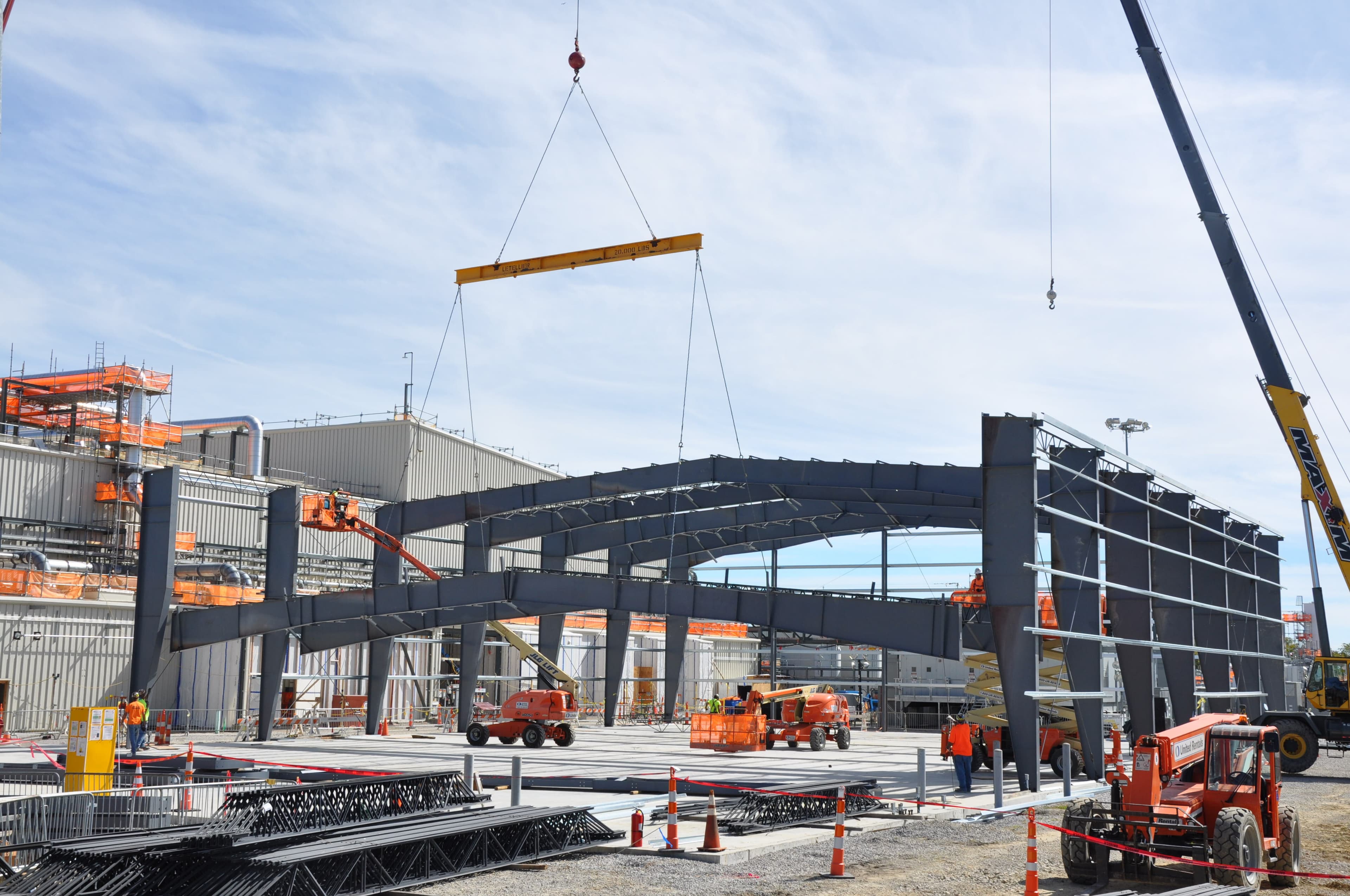
The request usually comes at the end of the expansion meeting. Lend the project two electricians, a millwright and the controls technician who knows the old line. On the project schedule that reads as four open names, and on the operating floor it can mean nobody left on nights who remembers why the same pump has failed twice since spring.
That second cost is not on the project schedule.
Most maintenance rosters have nothing spare to lend
Two vendor surveys from this summer put numbers on it. MaintainX, which sells maintenance software, surveyed 211 maintenance and operations leaders and published the results on July 22, 2026. Thirty-seven percent said their teams are chronically understaffed. Forty-eight percent of facilities rely on contractors to fill staffing gaps, 43% of teams are doing more overtime, and among the chronically understaffed teams, 46% said unplanned downtime is increasing because they are shorthanded.
Limble, which also sells maintenance software, asked about knowledge instead of headcount. Its survey of 686 full-time U.S. maintenance and operations employees, fielded July 29 to August 6, 2026, found that 74% of maintenance organizations have "critical assets that depend on a single person's knowledge." In the same survey, 47% reported losing knowledge they could not recover when someone left.
Hiring your way out takes months. MaintainX found that 72% of maintenance roles take 60 or more days to fill. The Bureau of Labor Statistics counted 522,000 manufacturing job openings in August 2026 (a preliminary, seasonally adjusted figure), up from 416,000 a year earlier. The BLS Occupational Outlook Handbook puts industrial machinery mechanics, machinery maintenance workers and millwrights at about 547,300 jobs in 2025 and says "overtime is common, particularly for mechanics."
Set the coverage floor before anyone is lent
The method below is ours and is not a published standard. For each shift, add up the response posts that cannot go unstaffed, the planned work that cannot move, shift supervision and a relief allowance for absence and training. That total is the coverage floor. Lendable capacity is the qualified people scheduled on that shift, minus the floor, minus the absences you already know about.
The answer can be zero.
Zero is useful. It tells the expansion team to find the labor somewhere else before the risk moves onto the night shift without anyone deciding it should. Work the numbers by shift and by capability, because a day shift with engineering down the hall has different coverage from a night shift with one supervisor covering three areas.
Count what people are qualified on, and ignore the titles. OSHA's electrical definitions in 29 CFR 1910.399 say it is "possible and, in fact, likely" for a worker to be qualified on certain equipment and unqualified on other equipment. Two mechanics do not cover for one controls technician when the fault is in a drive.
Planned electrical maintenance also belongs in the floor, and it is harder to push off than it was. The 2023 edition of NFPA 70B, which turned a recommended practice into a standard, took effect on January 16, 2023, according to an NFPA blog by Corey Hannahs, the association's senior electrical content specialist.
Protect the planner too. Doc Palmer, managing partner of Richard Palmer and Associates and author of McGraw-Hill's Maintenance Planning and Scheduling Handbook, says in an April 2026 Plant Services column that planners might end up on project teams, and that project engineers "find great value" in having them there. By his math, proper planning raises craft wrench time from 35% to 55%, so a 30-person crew does the work of 47. Borrow the planner for the expansion and that difference goes with the planner. "A planner should never routinely share a craft role or supervisory role," Palmer says.
Maintenance skills transfer to capital work, but the work habits do not
Moving underused maintenance staff onto capital work mostly shifts wage cost from one budget to another, and maintenance work habits do not always fit project work.
Walt Pozgay, manufacturing training manager at GE Appliances, runs into a related limit with apprentices. "I can only take as many apprentices as I can get good mentors," Pozgay says in a Manufacturing Dive story. Those mentors "are working maintenance technicians that are trying to keep a plant running," he says, and the plant has to set limits "so that you don't reach too far one way and sacrifice somewhere else."
A plant expansion has the same trade-off, spread over more hours. Keep the plant team on the work where their knowledge changes the decision (tracing undocumented field conditions, picking tie-in windows, accepting the finished system and learning it). Give bounded conduit, cable pulls, removals and punch work to the project contractor or a supplemental crew with a named receiver at the end. Our post on setting the skill mix for a multi-craft crew covers how to split those packages.
AEP rebuilt Mulberry Creek with the station still energized
The clearest recent example is on the grid side. American Electric Power rebuilt its Mulberry Creek substation, which carries multiple 345-kV and 138-kV lines in ERCOT, while it stayed in service. "Taking large portions of the station offline during construction was not an option," Forrest Farson, AEP's project manager, says in a T&D World Q&A published August 10, 2026.
The operating grid set the pace of construction. "We couldn't break the ring in more than one location at a time," Farson says, so the work was phased in smaller segments than first planned. When several planned outages were canceled, the team had to "continually adapt execution plans, reprioritize work, and identify alternative paths forward." He credits trust between AEP personnel, EPC partners, field crews and operations teams for getting issues "identified and resolved much more quickly."
Asked what he would tell engineers and project managers facing a similar job, Farson says, "Understand your constraints early, remain adaptable, maintain strong stakeholder engagement, and invest in capturing institutional knowledge."
A 2005 hospital job ran the same way. Northside Electric had to move the 12,000-amp service at the Virginia Commonwealth University Health System's main hospital before a new critical care building could go up, with 20 to 30 Northside electricians on the work. "We worked with the hospital's maintenance staff and plant engineers to determine that 35 different outages had to be scheduled," Mike Gentry, the project foreman, says in a 2006 Electrical Contractor story. None of the new bus duct was a standard size, so every section was field-measured with lasers for the supplier to fabricate. The transfer took a month. According to J.B. "Chuck" Guedri III, Northside's president, the crew could move only one or two systems a day, under a plan built around each hospital department's schedule.
Lockout coordination needs a named owner before the crews mix
OSHA's lockout standard, 29 CFR 1910.147, is specific here. Under (f)(2)(i), the on-site employer and any outside employer "shall inform each other of their respective lockout or tagout procedures." Under (f)(3)(ii)(C), when more than one crew, craft or department is involved in a group lockout, job-wide control goes to one authorized employee designated to coordinate the affected work forces and "ensure continuity of protection." Section (f)(4) requires specific procedures for shift or personnel changes.
Expansions add lockout hours for plant staff as well. Section (c)(7)(iii)(A) requires retraining whenever a change in machines, equipment or processes presents a new hazard, and (c)(6)(i) requires a periodic inspection of each energy control procedure at least annually. Put those hours in the floor.
For added workers from a staffing firm, OSHA's Protecting Temporary Workers page says host employers and staffing agencies "share responsibility for ensuring worker safety and health." Its example is an agency giving general safety and health training while the host gives training tailored to its own equipment and hazards. OSHA's coordination guidance asks that information be shared before on-site work starts and, as needed, "if conditions change." A first-day plan helps here, and we wrote one up for supplemental crews.
Specialist equipment installation is its own lane
Some packages belong to neither the plant nor the general contractor. At TSMC's Arizona fab, chairman Mark Liu said on the July 20, 2023 earnings call that there was "an insufficient amount of skilled workers with those specialized expertise required for equipment installation in a semiconductor-grade facility," as Construction Dive reported. TSMC pushed N4 production there from late 2024 to 2025. Liu also said on the call that the company was working on the problem by sending experienced technicians from Taiwan to train local workers for a short period, according to Manufacturing Dive.
TSMC ended up beating the revised 2025 date. The first fab started high-volume N4 production in Q4 2024, according to TSMC.
Sources
- Q&A: Rebuilding a Critical Substation While Supporting New Data Center Growth, Nikki Chandler, T&D World, August 10, 2026.
- Updated federal guidance and funds may boost manufacturing apprenticeships, Michelle No, Manufacturing Dive, May 4, 2026.
- The enormous value of management protecting maintenance planners, Doc Palmer, Plant Services, April 27, 2026.
- Limble to Unveil New State of Maintenance Research at 2026 Maintenance Hero Summit, Limble via PR Newswire, September 9, 2026.
- What 211 Maintenance Leaders Said About Skilled Labor Shortages, Marc Cousineau, MaintainX, July 22, 2026.
- Table 1. Job openings levels and rates by industry and region, seasonally adjusted, Job Openings and Labor Turnover Survey, U.S. Bureau of Labor Statistics, last modified September 29, 2026.
- Industrial Machinery Mechanics, Machinery Maintenance Workers, and Millwrights, Occupational Outlook Handbook, U.S. Bureau of Labor Statistics, accessed September 29, 2026.
- 29 CFR 1910.399, Definitions applicable to this subpart, Occupational Safety and Health Administration, accessed September 29, 2026.
- Beyond the NEC: NFPA 70B is a Critical Tool for Reliability and Electrical Safety, Corey Hannahs, National Fire Protection Association, June 20, 2025.
- Operation: Power Transfer, Darlene Bremer, Electrical Contractor, September 15, 2006.
- 29 CFR 1910.147, The control of hazardous energy (lockout/tagout), Occupational Safety and Health Administration, accessed September 29, 2026.
- Protecting Temporary Workers, Occupational Safety and Health Administration, accessed September 29, 2026.
- Communication and Coordination for Host Employers, Contractors, and Staffing Agencies, Occupational Safety and Health Administration, accessed September 29, 2026.
- Labor shortages delay Arizona chip plant opening until 2025, Sebastian Obando, Construction Dive, July 21, 2023.
- TSMC delays Arizona facility opening, citing a lack of specialized labor, Kate Magill, Manufacturing Dive, July 27, 2023.
- TSMC Arizona, TSMC, accessed September 29, 2026.
Featured image: PEO ACWA, via Wikimedia Commons (CC BY 2.0).