
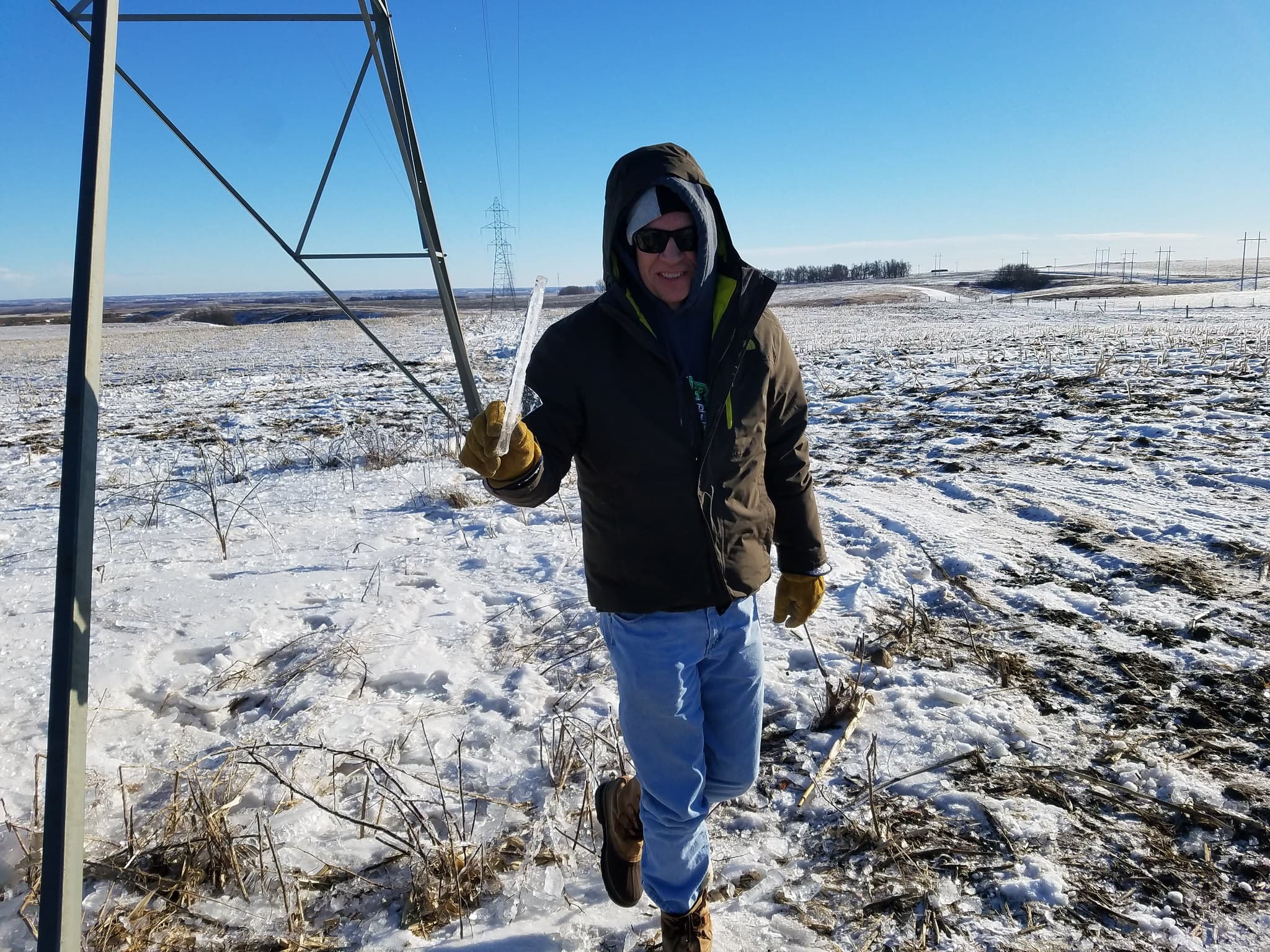
An 18-volt tool battery rated at 12 amp-hours is 216 watt-hours, and it can't get on a passenger plane. The FAA says rechargeable batteries "exceeding 160 Wh are forbidden," in the cabin and in checked bags alike. This traveling electrician checklist runs in the order you'll need it, from packing to the first paycheck, with a winter job near Fargo, N.D., as the example.
Can you fly with power tool batteries?
Yes, most of them, if the spares ride in the cabin. Watt-hours are the pack's nominal volts times its amp-hours, and most packs sold as 20-volt max are 18 volts nominal. An 18-volt 5.0 pack (5 amp-hours) is 90 watt-hours and flies without airline approval. A 6.0 is 108 and an 8.0 is 144. Anything over 100 and up to 160 needs the airline's approval, with two spares per person at most. A 9.0 pack is 162 watt-hours, two over the line, and it can't fly in either bag.
Go by the watt-hours printed on the case. Federal rules put every spare in carry-on baggage, protected from short circuit, so tape the terminals or bag each pack by itself. The FAA's power tools page says to "remove the battery and pack it in your carry-on baggage while checking the tool." A tool checked with its pack on has to be fully powered off and protected from accidental activation. Airlines can be stricter, the FAA says. Before you pack any of it, ask whether the job furnishes power tools, because if it does, the battery question goes away.
Leave the PVC glue at home, since the FAA bars pipe cement and other flammable adhesives, and spray paint, from both bags.
Flying with tools through TSA
Tools 7 inches or shorter "may be allowed" in the cabin, TSA says, and power tools and anything longer get checked. Hammers, drills, saws and crowbars go in checked bags at any length. So do box cutters and utility knives, "with or without blades," and any multi-tool with a knife. TSA's list doesn't mention meters, so message AskTSA before you fly. At the checkpoint, TSA says, the officer makes the final decision.
Since May 7, 2025, a driver's license that isn't REAL ID compliant (look for the star, or the word Enhanced) won't get you through the checkpoint on its own, and TSA says its $45 ConfirmID fallback comes with no guarantee. A U.S. passport covers the checkpoint, and it also counts for the hiring paperwork below.
The papers to bring for day one
You fill in Section 1 of Form I-9 no later than your first day of work, and by the third business day after it you show original, unexpired documents (start on a Monday, and USCIS says the deadline is Thursday). If you're hired through a staffing agency, it can do this paperwork when you join its roster, so ask whether yours is already done. You pick which documents to show (the employer can't specify), either one List A document or one List B plus one List C, like a state driver's license plus an unrestricted Social Security card or a certified copy of your birth certificate. Photocopies don't count.
USCIS's employer handbook says the Social Security card "must not be laminated," so if yours is, bring the passport or a certified birth certificate instead.
Use the exact legal name from Section 1 on payroll and the badge request. Pack a license card for every state you're licensed in, and find out this week whether the state you're headed to will honor it. If the job requires an OSHA 10 or 30 card, photograph it, because OSHA keeps no records of those classes and cannot replace a card; your Outreach trainer can, once, for a class taken in the last five years. Add the written offer, and if the rate or the per diem isn't in it, ask the recruiter before you leave. Keep scans of everything in one phone folder that opens without cell service.
Driving instead
If you drive, the tools come into the room at night, and the truck gets parked under a light near the door. In a North Dakota winter, check the state's 511 road report before you leave and keep the tank full. NHTSA says drowsy-driving crashes peak between midnight and 6 a.m. and in the late afternoon, so plan the long stretches around those hours.
Arrival and the first morning
If the first shift starts at 6 a.m. Monday, book the room for Sunday night and confirm the check-in time when you book.
The evening you get in, drive to the site in the dark, the way it will look before a 6 a.m. start, and find the entrance the crews use and the badge office, which may be nowhere near the mailing address.
Expect orientation before you touch a tool, and ask the recruiter whether the site wants a drug screen or a background check before day one. OSHA requires "an adequate supply of potable water" on site, but plan on bringing your own lunch the first day.
Cold weather and cash
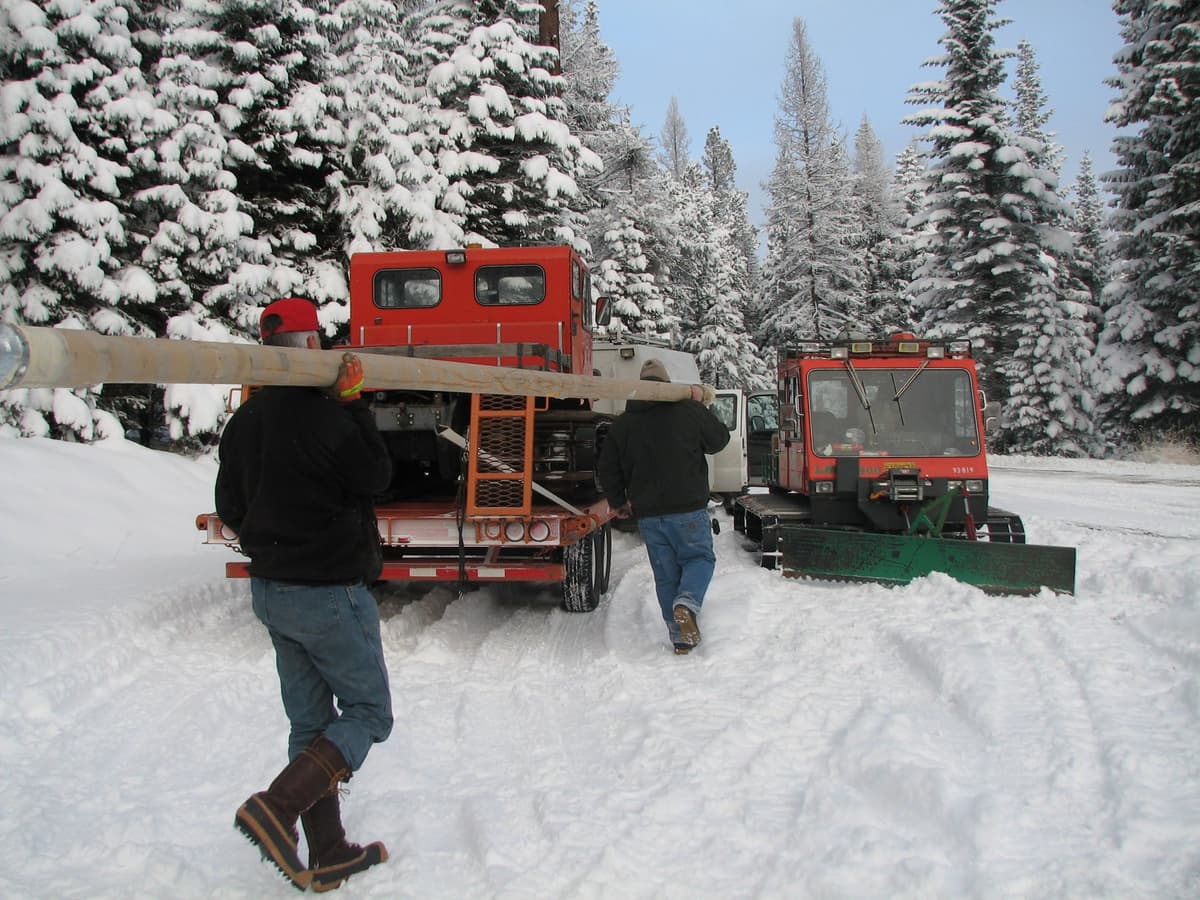
NOAA's 1991-2020 normals for Fargo's Hector International Airport put the average January low at 0.2 degrees, and an average January has 15.9 days that drop to zero or colder. At zero with a 15 mph wind, the National Weather Service says the wind chill is 19 below and exposed skin can freeze in 30 minutes.
OSHA says to wear at least three layers, from a wool or synthetic base to a wind and rain shell. OSHA doesn't require employers to pay for ordinary winter coats, jackets, gloves or hats, so pack your own and ask what the site supplies.
North Dakota law, NDCC 34-14-02, only requires pay "at least once each calendar month," so ask which payday your first check falls on, and bring enough cash for lodging deposits and food until it and the per diem arrive. For a rough lodging budget, the GSA's federal rate for Fargo is $113 a night from October 1, 2026, through September 30, 2027, so two weeks comes to $1,582.
Travel work puts you on a crew with "a bunch of characters and some wild people you wouldn't normally meet, and you're all working together," Parker Worth, a journeyman wireman and substation technician, told T&D World for a story published October 24, 2022. "For me, I love that," he says.
Sources: FAA PackSafe, Airline Passengers and Batteries (updated Oct. 2, 2026), Lithium Batteries (updated Aug. 11, 2026), Power Tools (updated June 5, 2025) and the PackSafe printable chart (updated Nov. 14, 2025); eCFR 49 CFR 171.8, 49 CFR 173.185(a)(5) and 49 CFR 175.10(a)(18) (eCFR current as of Oct. 8, 2026); TSA What Can I Bring pages for Tools (July 21, 2026), Power Tools, Box Cutters, Utility Knives, Multi-tools, Hammers, Drills and Drill Bits, Saws, Crowbars and the complete item list; TSA REAL ID, TSA ConfirmID and TSA Acceptable Identification at the TSA Checkpoint; USCIS Instructions for Form I-9 (edition 01/20/25), I-9 Central pages Completing Section 1 and Completing Section 2, Form I-9 Acceptable Documents (reviewed Oct. 5, 2026), and Handbook for Employers M-274 sections 3.0, 4.0 and 13.3 (13.3 updated Nov. 19, 2025); OSHA Outreach Training Program FAQ; North Dakota 511; NHTSA, Drowsy Driving; eCFR 29 CFR 1926.51(a)(1) and 29 CFR 1926.95(d)(4)(ii) (eCFR current as of Oct. 8, 2026); NOAA NCEI U.S. Climate Normals 1991-2020, Fargo Hector Intl AP (USW00014914); National Weather Service, Understanding Wind Chill; OSHA Winter Weather, Preparedness; North Dakota Century Code 34-14-02; GSA Per Diem Rates, FY 2027 (Oct. 1, 2026, to Sept. 30, 2027); T&D World, Amy Fischbach, "Travelers in the Line Trade: Part 2" (Oct. 24, 2022). All pages read Oct. 11, 2026. Featured photo: Western Area Power Administration (photo courtesy of Jack Winter), via Flickr, licensed CC BY 2.0, https://creativecommons.org/licenses/by/2.0/