
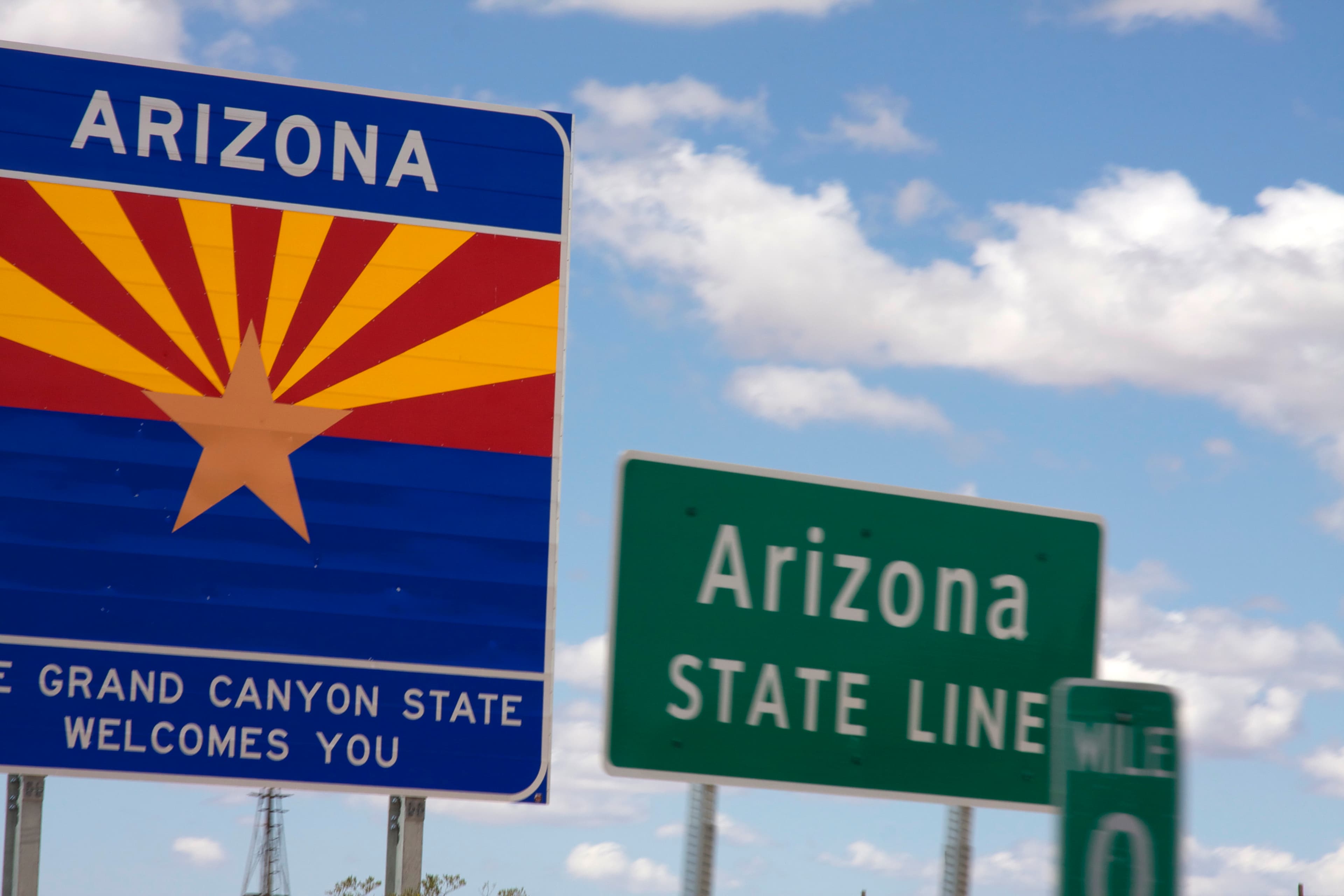
Texas names ten states whose journeyman electricians it will license through reciprocity. Read the fine print on the Texas Department of Licensing and Regulation's out-of-state page and the list comes with conditions. A Louisiana state contractor's license counts toward a Texas master license only if the applicant lives in Louisiana. An Iowa Class A master qualifies, while an Iowa Class B master "will not reciprocate." For apprentices, residential wiremen and every other Texas license type, the page says "Currently there are no reciprocal licensing agreements for any other license types."
That is the problem with the word reciprocity.
It sounds like a transfer, but in practice it is usually a shorter application with conditions attached. Those conditions change by state, by license class and sometimes by month. An electrician who hits the road on someone's word that two states have reciprocity can end up at a badging office with a card that does not cover the work on the schedule.
Texas is where the pressure is right now
Crusoe's AI data center campus in Abilene has eight buildings and will span roughly 4 million square feet. When it topped out the eighth and final building in November 2025, Crusoe credited 7,000 electricians, construction pros and skilled tradespeople who "come to Abilene every day to build the future of AI infrastructure," according to W.Media. The electricians on that site need Texas licenses. So do the apprentices.
TDLR's May 12, 2026 staff report counted 241,404 licenses for fiscal 2026 through March, including 40,988 journeyman electricians and 18,815 masters. Texas keeps adding partners. Its June 5, 2026 deal with Ohio treats an Ohio master electrical contractor license as substantially equivalent to a Texas master electrician license, though "each state's prerequisites must still be met." Courtney Arbour, TDLR's executive director, says the agreements are "opening doors for skilled electricians."
Cameron Dodd, a journeyman electrician and political director of the IBEW's Austin chapter, told the Texas Tribune in April that it was too early to see the effects. He is optimistic the agreements will pull experienced, already licensed workers onto big data center and industrial jobs. "All the baby boomers and older electricians are going to retire," Dodd says. "The reciprocity agreements, that should help."
The state lists change between press releases
TDLR's Dec. 30, 2025 release on Arkansas and its Feb. 6, 2026 release on Iowa both list Montana as a journeyman reciprocity state. The Mar. 20 release does not. Neither does the current out-of-state page. Alabama is on it now.
The releases also leave conditions out. The Iowa one says masters can work in either state "without obtaining an additional license or taking additional tests." The application rules say otherwise. An Iowa master still files a Texas application, pays $45, sends a copy of the Class A license and a letter of good standing, and must have passed Iowa's statewide exam. The Texas master route also wants 12,000 supervised hours and a journeyman license held two years (one year for Alabama, Iowa, Nebraska and Ohio). The journeyman route costs $30 and needs 8,000 hours under a master, and on that one TDLR contacts the home state itself.
Save the date you read each page.
How you got the first license decides the next one
Minnesota grants reciprocity only when the first license was obtained "by examination at the state level," according to the Minnesota Department of Labor and Industry, and a license picked up through an agreement with a city does not count. Virginia asks for more paperwork. Its universal license recognition application (form v4, dated 07/01/2026, $171.75, not refundable) requires each state board to send its letter of good standing directly to the Board for Contractors, dated in the last 90 days, stating "the means of obtaining licensure (i.e. exam, reciprocity, etc.)." A license earned by reciprocity may not count in a third state.
Paper still matters in the Northwest. For the licensing verification Oregon requires, Washington's Department of Labor & Industries says "Mail is the only option."
California and Washington start most travelers at the exam
California does not waive its test. Its Electrician Certification Unit says an out-of-state license makes a worker eligible to sit for the test, that every electrician working for a C-10 contractor should be certified "regardless of the length of the project," and that there is "no grace period." A foreman who works with the tools needs the certification too.
The Washington and Oregon agreement, in effect since Aug. 17, 2020, covers general journey-level electricians who came up through an 8,000-hour apprenticeship and a state exam. No other specialty is included. "With more than 400 miles of shared border, this agreement just makes sense for both states," says Lori Graham, then interim administrator of the Oregon Building Codes Division. Washington's out-of-state exam application (F626-009-000, dated 09-2026) asks for 16,000 hours for the general journey-level exam, at least 4,000 of them on new industrial or commercial installations. It accepts no self-verification of hours and charges $114.60.
In 2019, L&I cited Bailiwick Services LLC of Chaska, Minn., and five subcontractors from Washington, Indiana, Oregon, Wisconsin and Texas over 546 violations, with fines totaling $273,000, for using unlicensed electrical workers and skipping permits at retailers and restaurants in 14 Washington cities. Bailiwick appealed. "This is about people's safety," says Steve Thornton, L&I's chief electrical inspector. L&I's 11-inspector ECORE team issued 2,976 citations against unlicensed contractors and uncertified electricians in 2018.
Some states have nothing to reciprocate
South Dakota's Department of Labor and Regulation lists 12 states, among them Arizona, Illinois, New York and Pennsylvania, as having "no state licenses," and says Florida varies by county or municipality. It files them under unverified requirements and tells readers to call to confirm. Ohio is on that list, even though its state master electrical contractor license is the one Texas now accepts. The NCCER reciprocity map says several states leave licensing to local municipal government. The same South Dakota page lists Texas as a master reciprocity partner, although TDLR's master list does not include South Dakota. Agreements can run one way.
A shared exam does not settle it. NASCLA's list shows 19 participating agencies for its accredited electrical exams, one of them Vanderburgh County, Indiana. Michael Johnston, then NECA's executive director of codes and standards, wrote in Electrical Contractor in 2021 that the program "is not intended to create a national license." In the same article, Joseph Wages Jr., director of digital education at the International Association of Electrical Inspectors, asked why a proven electrician should sit for another state's test. "Are we to believe that electricity acts differently from one state to another state? I don't think so," Wages said.
A license is one check among several
OSHA's general-industry definition of a qualified person in 29 CFR 1910.399 turns on training in specific equipment and its hazards. Note 1 to that definition says a worker is likely to be qualified on some equipment and "'unqualified' as to other equipment." The construction rule, 29 CFR 1926.449, is shorter: a qualified person is one "familiar with the construction and operation of the equipment and the hazards involved." Neither one mentions a state license. The code edition changes at the state line too. Wisconsin moved to the 2023 NEC on Sept. 1, 2026 after years on the 2017 edition, and EC&M counted six states already on the 2026 NEC (more on the 2026 NEC changes in Texas and North Dakota).
In IBEW usage, reciprocity means health and welfare and pension money following a traveling member, on what the union calls the "money follows the man" concept. It says nothing about whether a state will license you.
Storm work has its own rule. Under 16 TAC 73.28, when a disaster is declared and TDLR's executive director finds too few Texas-licensed electricians available, an electrician licensed in another state can get a Texas emergency license. It expires 90 days after issuance, is valid only in the disaster area, and may be renewed for another 90 days if the disaster is still in effect on the eightieth day. A second license also means a second renewal clock. A Texas journeyman license renews every year and needs 4 hours of continuing education each cycle.
Get the approval in writing before booking travel
Before buying a nonrefundable ticket, have the employer's licensing contact put four things in writing: the exact site address, the destination license class that matches the scope, the license number with its status on the regulator's lookup, and the expiration date against the length of the assignment. An application receipt proves the paperwork went in. It does not prove anything was issued. Washington has one carve-out. After a passed exam, the receipt for certification counts as the certificate for 30 days, according to the L&I application. For the rest of the trip math, see how to plan a travel rotation.
For apprentices headed to Texas, timing is simpler. The apprentice license costs $20 and needs no exam, and online applicants who report no criminal convictions are automatically issued a temporary license. A criminal-history review can take one to six weeks. Scotty Wristen, owner of WE Electric in Abilene, lost five workers to the data centers and is now hiring teens right out of high school as apprentices. "We hire them, get them an apprentice card, and start their time on it," Wristen told The Texas Tribune.
This article is general information, not legal advice. Confirm current requirements with the licensing board in the state where the work is.
Sources
- Transfer Your Out-of-State Electrician License to Texas, Texas Department of Licensing and Regulation, accessed Sept. 29, 2026.
- Staff Report for the Electrical Safety and Licensing Advisory Board, Texas Department of Licensing and Regulation, May 12, 2026.
- Texas Expands Electrician Reciprocity with Ohio to Support Skilled Workforce and Economic Growth, Texas Department of Licensing and Regulation, June 5, 2026.
- Texas Expands Electrician Reciprocity with Alabama to Support Skilled Workforce and Economic Growth, Texas Department of Licensing and Regulation, Mar. 20, 2026.
- Texas Expands Electrician Reciprocity with Iowa to Support Skilled Workforce and Economic Growth, Texas Department of Licensing and Regulation, Feb. 6, 2026.
- Texas Expands Electrician Reciprocity with Arkansas to Support Skilled Workforce and Economic Growth, Texas Department of Licensing and Regulation, Dec. 30, 2025.
- Apprentice Electrician, Texas Department of Licensing and Regulation, accessed Sept. 29, 2026.
- Renew a Journeyman Electrician License, Texas Department of Licensing and Regulation, accessed Sept. 29, 2026.
- 16 Tex. Admin. Code 73.28, Licensing Requirements, Emergency Licenses, Legal Information Institute, Cornell Law School, accessed Sept. 29, 2026.
- Data center boom strains Texas homebuilders' need for electricians, The Texas Tribune, Apr. 28, 2026.
- Crusoe tops off final AI data center in Abilene, Texas, W.Media, Nov. 18, 2025.
- Electrical license reciprocity, Minnesota Department of Labor and Industry, accessed Sept. 29, 2026.
- Tradesman Universal License Recognition Application (A501-2710ULR-v4), Virginia Department of Professional and Occupational Regulation, July 1, 2026.
- Electrician, Washington State Department of Labor & Industries, accessed Sept. 29, 2026.
- Reciprocity agreement created for general electricians, Washington State Department of Labor & Industries, Aug. 18, 2020.
- Out of State Application for Electrical Examination (F626-009-000), Washington State Department of Labor & Industries, 09-2026.
- Electrical companies facing large fines for unlicensed, unpermitted work, Washington State Department of Labor & Industries, Apr. 9, 2019.
- Reciprocal Agreements for Licensing, South Dakota Electrical Commission, South Dakota Department of Labor and Regulation, accessed Sept. 29, 2026.
- Reciprocity Map, NCCER, accessed Sept. 29, 2026.
- Electrician Certification FAQs, California Division of Labor Standards Enforcement, accessed Sept. 29, 2026.
- NASCLA Electrical Exams: Participating State Agencies, National Association of State Contractors Licensing Agencies, accessed Sept. 29, 2026.
- Expansion of Electrical License Reciprocity: Update on NASCLA Accredited Electrical Examination Program, Michael Johnston, Electrical Contractor, Dec. 15, 2021.
- Wisconsin Adopts 2023 National Electrical Code, Michael Morris, EC&M, Sept. 9, 2026.
- 29 CFR 1910.399, Definitions applicable to this subpart, Occupational Safety and Health Administration, accessed Sept. 29, 2026.
- 29 CFR 1926.449, Definitions applicable to this subpart, Occupational Safety and Health Administration, accessed Sept. 29, 2026.
- The Right of Reciprocity, International Brotherhood of Electrical Workers, Dec. 1, 2025.
Featured image: CGP Grey, via Wikimedia Commons (CC BY 2.0).