
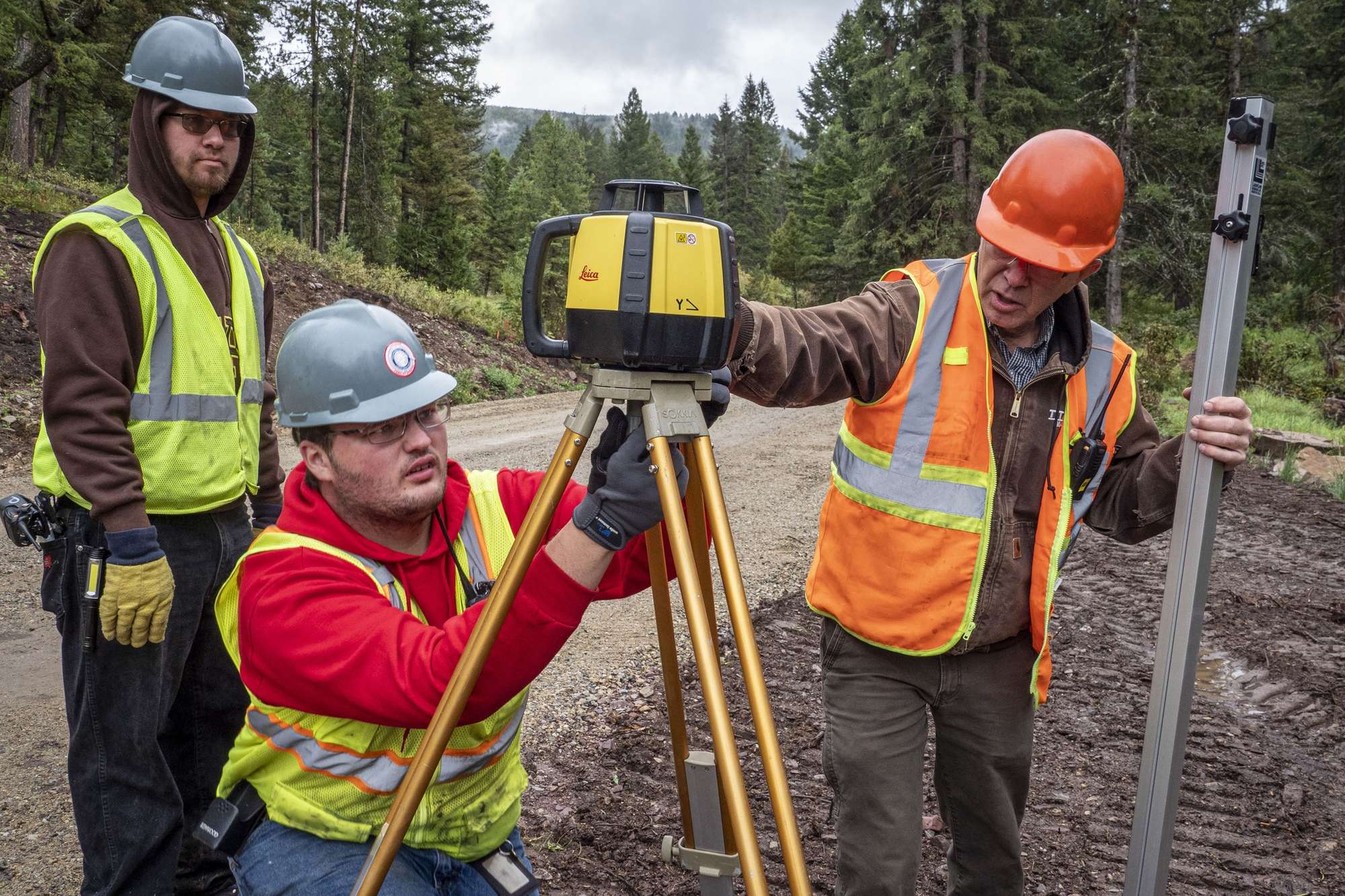
In June 2026, twenty-four students aged 15 to 20 spent two weeks on the M State campus in Moorhead, Minnesota, building a concession stand for the Red River Fairgrounds. The camp covered carpentry, electrical work and plumbing. It ran four months before Careers in Construction Month, and it is the kind of thing the month exists to promote.
October 2026 is the fourteenth annual Careers in Construction Month, by NCCER's own numbering.
Four ways into the construction trades in 2026
29 CFR 29.5 sets the minimum every registered apprenticeship owes you: 144 recommended hours of related instruction a year, a starting age of not less than 16, at least 2,000 hours of on-the-job learning in a time-based program, and, at 29.5(b), "A progressively increasing schedule of wages to be paid to the apprentice consistent with the skill acquired." A construction apprenticeship pays you from day one. The raises are in the standards.
Path one is a registered apprenticeship through a JATC, the joint IBEW and NECA training committee in your area. Start with a phone call. Find out which local covers your county, call the training center, and ask the coordinator when the window opens, because most take applications once or twice a year.
The electrical training ALLIANCE lists the minimums: "Minimum age 18, High School Education, One Year of High School Algebra, Qualifying Score on an Aptitude Test, Drug Free." Inside wireman runs five years, outside lineman three and a half, residential wireman three, installer/technician three. The aptitude test is 69 questions in about 97 minutes, scored 1 to 9, and "You must receive a score of at least 4 or higher to pass." We wrote up the data center electrician apprenticeship separately.
The merit shop side runs through ABC and IEC. ABC counts 67 chapters and over 450 government-registered apprenticeship programs. IEC's electrical apprenticeship takes about four years, 8,000 hours of on-the-job training and 576 hours of classroom instruction. Starting wages tend to run near 50 percent of a journeyman's rate; employers may help with tuition, and students usually buy their own books.
Application windows close before classes start: IEC Dakotas began its 2026-27 classes the week of August 24 and closes registration each year before they begin. The twelve questions to ask a skilled trades recruiter are worth asking a program coordinator too.
A community or technical college can shorten a later apprenticeship.
NDSCS charges a North Dakota resident $211.51 per credit in tuition and general fees at Wahpeton in 2026-27, plus a $30 per credit instructional fee on electrical courses, and gives apprentices up to 32 credits toward an A.A.S. M State's Electrical Technology diploma runs 74 credits, a published estimate of $19,203.04 for tuition, fees and books, and one year of credit toward licensure in Minnesota and the Dakotas. Its fall application period opens Sept. 1 for the next academic year.
Before any of that, there is pre-apprenticeship. NABTU's Multi-Craft Core Curriculum is a 120-hour minimum course taught, as of its most recent published count, in more than 170 apprenticeship readiness programs, with no tuition. You do not apply to NABTU. Building trades councils and workforce boards run the programs, so ask which covers yours. Shops also hire helpers, so you can be on a payroll while you wait for a window.
What the trades actually pay in 2026
The median wage for construction and extraction occupations, the BLS bucket holding the trades plus mining and oilfield work, was $59,540 in May 2025, against $50,980 for all occupations. BLS projects about 587,000 openings a year through 2035. Electricians came in at $63,190, plumbers $63,800, power-line installers $95,320.
Those are national midpoints, and none count overtime. Elevator and escalator installers and repairers came in at $109,910, which BLS pairs with a high school diploma and a four-year apprenticeship, though those apprenticeship lists open rarely.
"If current consensus forecasts hold true, the construction industry will need to bring in 349,000 new workers in 2026 just to keep the supply and demand for labor in equilibrium," says Anirban Basu, chief economist at Associated Builders and Contractors, in a January 15, 2026 release. Retirements drive most of that need. Read how to compare a trade job offer beyond the hourly rate before taking the first number you hear.
Getting into a trade in North Dakota and the upper Midwest
The four paths are national. The schools, tuition figures and license rules below are North Dakota and Minnesota.
Job Service North Dakota's list dated December 24, 2025 names 104 registered apprenticeship sponsors with 2,156 active apprentices, 417 at the Dakotas and Western Minnesota Area Electrical JATC in Fargo.
You may work as an electrical apprentice there once you are over 16, under a licensed master, class B or power limited electrician, and must register in the first six months. The journeyman exam takes 8,000 hours of practical experience plus 576 hours of classes, or 6,000 hours with a two-year electrical degree, and either way they cannot be gathered in less than three years. NDSCS Electrical Construction graduates are exempt from the classroom training required by North Dakota Century Code 43-09-11.
"Through private, jointly-managed, trade centered classroom education with on-the-job training, we build the next generation of craftspeople for the state of North Dakota," says Jason Ehlert, president of the North Dakota State Building Trades Union.
What Careers in Construction Month is, and who runs it
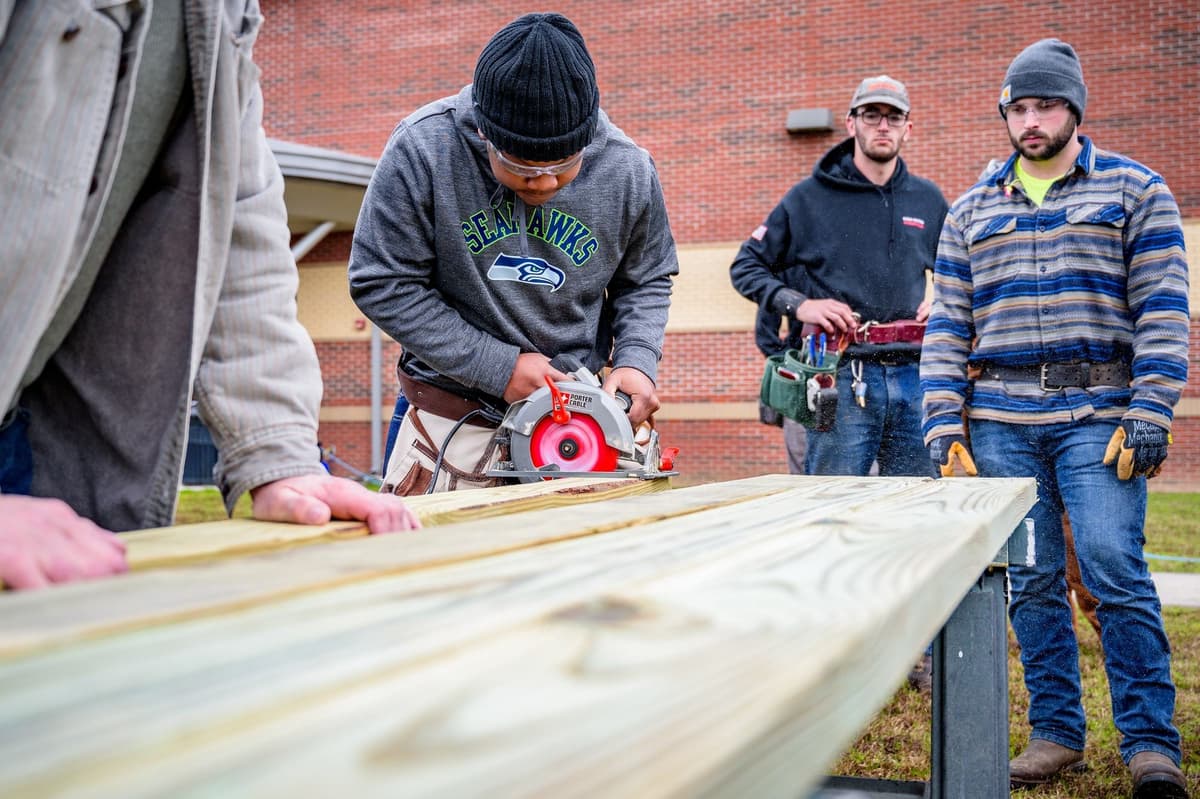
The 2026 scholarship rules define it: "Careers in Construction Month (CICM) is a national workforce development celebration created and led by NCCER's Build Your Future (BYF) initiative." NCCER says BYF has marked these careers each October since 2005, when it was one week, and its numbering, tenth annual in 2022 and eleventh in 2023, puts the first month-long version at 2013.
There is no 2026 theme; BYF does not publish one.
Governors proclaim the month. Employers and schools take the CICM pledge. People run job site tours and career fairs in their own towns. Anyone can ask: BYF's page says, "State residents of all ages can submit a proclamation request!"
Pledge between September 1 and October 31, 2026 and you enter a drawing for five $1,000 scholarships from the John Trimmer Fellowship Endowment Fund, drawn November 2. Each $1,000 goes to a student's training program, not to the winner.
Is construction a good career? What starting out looks like
First year is mostly material handling and cleanup. You dig. You bend pipe somebody else laid out, you are outside in January and in an attic in July, and you buy your own hand tools. The money is lean until the second or third raise, and between jobs you can sit for weeks.
Students see the good part first.
"I really like that you have an immediate reward for your work. You wire something, turn the lights on and can sit back and say, 'I made that happen'," says Nathan Micelli, a senior in the electrical trades program at Capital Region BOCES in New York. Azrael Lozano is in the plumbing program at the same BOCES. "I was thinking of doing electrical, but I thought more about the work and the money and chose plumbing," he says.
Tristan Coates was around 10 when a mentor from his after-school program put him on carpentry. He won SkillsUSA carpentry gold in 2022, started Coates Builder Improvements at 18, and at 22 employs five people at a company with revenue approaching $1 million.
"Do it. The sky's the limit. If you're willing to put in the effort and the work, it's for you," says Coates.
Rinvio, which runs this blog, staffs electricians and other trades nationwide on W-2, and our open skilled trades jobs are on the site.
Sources
- Careers in Construction Month (CICM) Pledge Scholarship Drawing, Official Rules, NCCER and Build Your Future, September 2026.
- Careers in Construction Month, Build Your Future, NCCER, accessed September 19, 2026.
- What is Careers in Construction Month and How Do I Get Involved?, NCCER, September 23, 2021.
- Celebrate the Tenth Annual Careers in Construction Month With NCCER and BYF, NCCER, September 1, 2022.
- Celebrate the Eleventh Annual Careers in Construction Month with NCCER and Build Your Future, NCCER, September 8, 2023.
- 29 CFR 29.5, Standards of apprenticeship, Code of Federal Regulations, U.S. Government Publishing Office (govinfo.gov), revised as of July 1, 2025.
- Apprenticeship Training, electrical training ALLIANCE, accessed September 27, 2026.
- Applicants: Electrical Work Specialties, electrical training ALLIANCE, accessed September 27, 2026.
- Aptitude Test, Waterloo and Mason City Electrical JATC, IBEW Local 288 (ibewjatc.org), accessed September 27, 2026.
- Craft Training & Apprenticeship, Associated Builders and Contractors, accessed September 27, 2026.
- ABC: Construction Industry Must Attract 349,000 Workers in 2026 Despite Macroeconomic Headwinds, news release quoting chief economist Anirban Basu, Associated Builders and Contractors, January 15, 2026.
- Electrical Apprenticeships Near You, Independent Electrical Contractors, accessed September 27, 2026.
- 2026-2027 Apprenticeship Program Fall Registration Is Open, IEC Dakotas, accessed September 27, 2026.
- 2026-2027 Tuition & Fees, including the instructional fee schedule, North Dakota State College of Science catalog, accessed September 27, 2026.
- Apprenticeship, TrainND Southeast, North Dakota State College of Science, accessed September 27, 2026.
- Electrical Technology (Electrical Construction), Associate in Applied Science, North Dakota State College of Science 2026-2027 catalog, accessed September 27, 2026.
- Electrical Technology, program page, Minnesota State Community and Technical College (M State), accessed September 27, 2026.
- Electrical Technology, Electrician, Diploma (74 credits), tuition estimate, M State Tuition Calculator, accessed September 27, 2026.
- Building Trades Apprenticeship Readiness Programs (ARPs): Frequently Asked Questions, on the Multi-Craft Core Curriculum (MC3), North America's Building Trades Unions, November 2020.
- Construction and Extraction Occupations, Occupational Outlook Handbook, U.S. Bureau of Labor Statistics, May 2025 wages and 2025-35 projections, last modified August 27, 2026.
- Electricians, Occupational Outlook Handbook, U.S. Bureau of Labor Statistics, last modified August 27, 2026.
- Elevator and Escalator Installers and Repairers, Occupational Outlook Handbook, U.S. Bureau of Labor Statistics, last modified August 27, 2026.
- Electrical Power-Line Installers and Repairers, Occupational Outlook Handbook, U.S. Bureau of Labor Statistics, last modified August 27, 2026.
- Plumbers, Pipefitters, and Steamfitters, Occupational Outlook Handbook, U.S. Bureau of Labor Statistics, last modified August 27, 2026.
- Registered Apprenticeship Sponsors in North Dakota, Job Service North Dakota, list dated December 24, 2025.
- Apprenticeship Information & Registration, North Dakota State Electrical Board, accessed September 27, 2026.
- Qualifications for Licensure, North Dakota State Electrical Board, accessed September 27, 2026.
- North Dakota Century Code chapter 43-09, Electricians, including section 43-09-11, North Dakota Legislative Branch, accessed September 27, 2026.
- October is national Careers in Construction Month and there is no better time than now for CTE students to enter the industry, Capital Region BOCES, October 1, 2025, for the Nathan Micelli and Azrael Lozano quotes.
- Students build skills at construction trades camp, by Halle Sanders, InForum, June 1, 2026, for the Herdina Construction Trades Camp.
- Construction industry grapples with worker shortages, by Carrie McDermott, Prairie Business via the Grand Forks Herald, October 3, 2025, for the Jason Ehlert quote.
- SkillsUSA Champ Builds Thriving Business, Makes Team USA, by Tanja Kern, Walls & Ceilings, June 23, 2026, for Tristan Coates.
- SkillsUSA Names Florida Carpentry Champion to 2026 WorldSkills USA Team, SkillsUSA, April 30, 2026, for Tristan Coates.
Featured photo: USDA photo by Preston Keres (public domain)